Use Case

Business Continuity

Proactively monitor and eliminate false positives using machine learning to achieve optimal security posture while verifying for business continuity.

The Challenge

Overcoming false positives for Timely Response and Uninterrupted Business Operations

45%

of all alerts are false positives

74%

of breaches today caused by misconfigurations

$88,000

The average cost of downtime per hour

Benefits

Reduce the load on security teams proactively by stop chasing down false positive events.

Increase effectiveness

Alleviate resources waste by culling false positive events. Focus on actual cyber events, rather than wasting resources on false alarms.

Ensure Business Uptime

Proactively monitor misconfigurations that might cause friction or disrupt business operations and functions.

Reduce risk exposure

Prevent postural gaps posed by turning off a security signature that causes a false positive event

Increase confidence

Re-energize confidence in the security organization by proactively detecting and remediating impacts to applications and users

Features
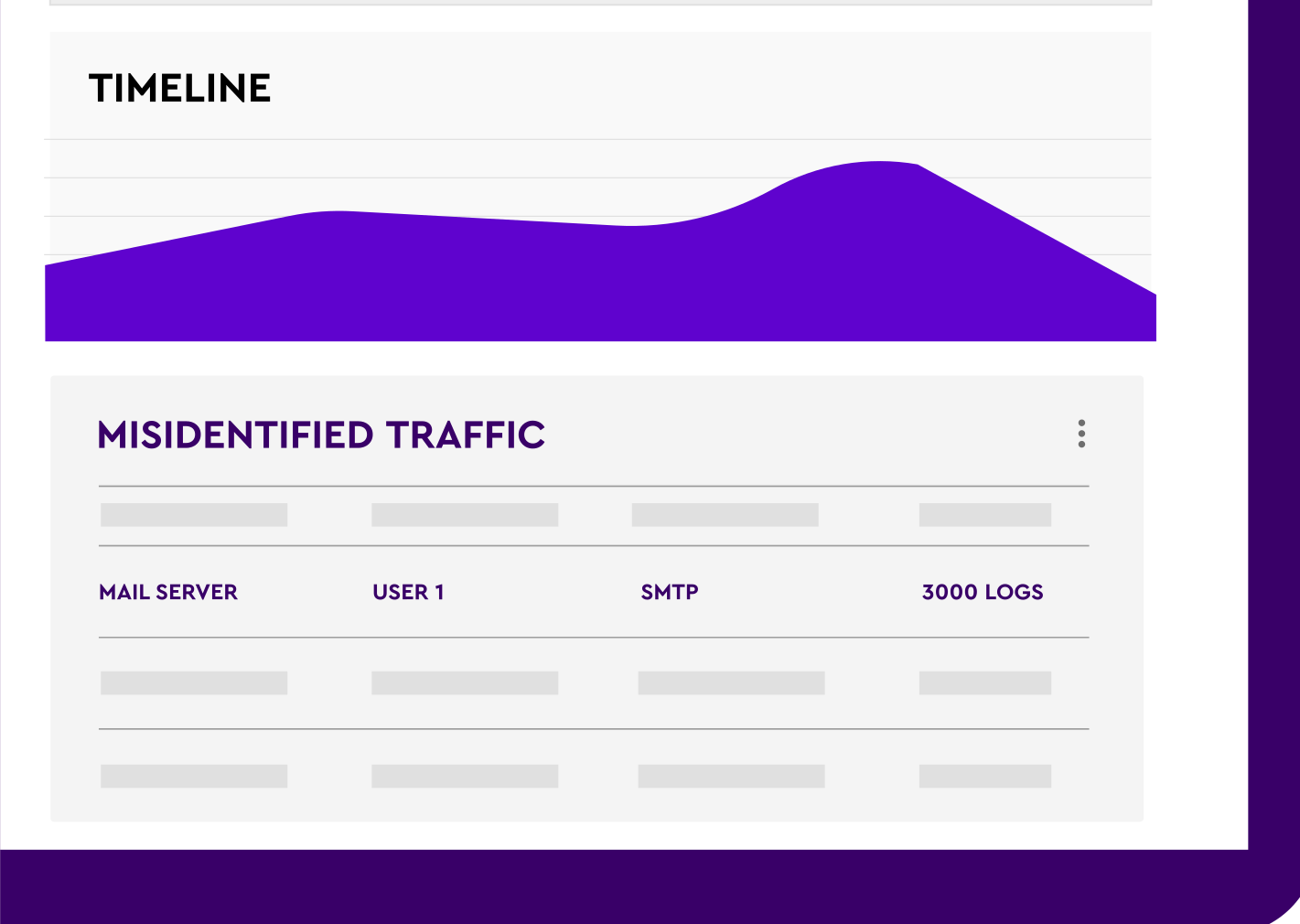
Machine learning-based analysis

Automatically identify and remediate false positive events based on advanced machine learning algorithms.

87% improvement in MTTR of cyberattacks by exclusively eliminating false alarm events before any manual analysis

Actionable Remediation paths

Make informed decisions based on contextualized data on each alert, including the business context and the potential impact on the organization

90% improvement in root cause analysis time
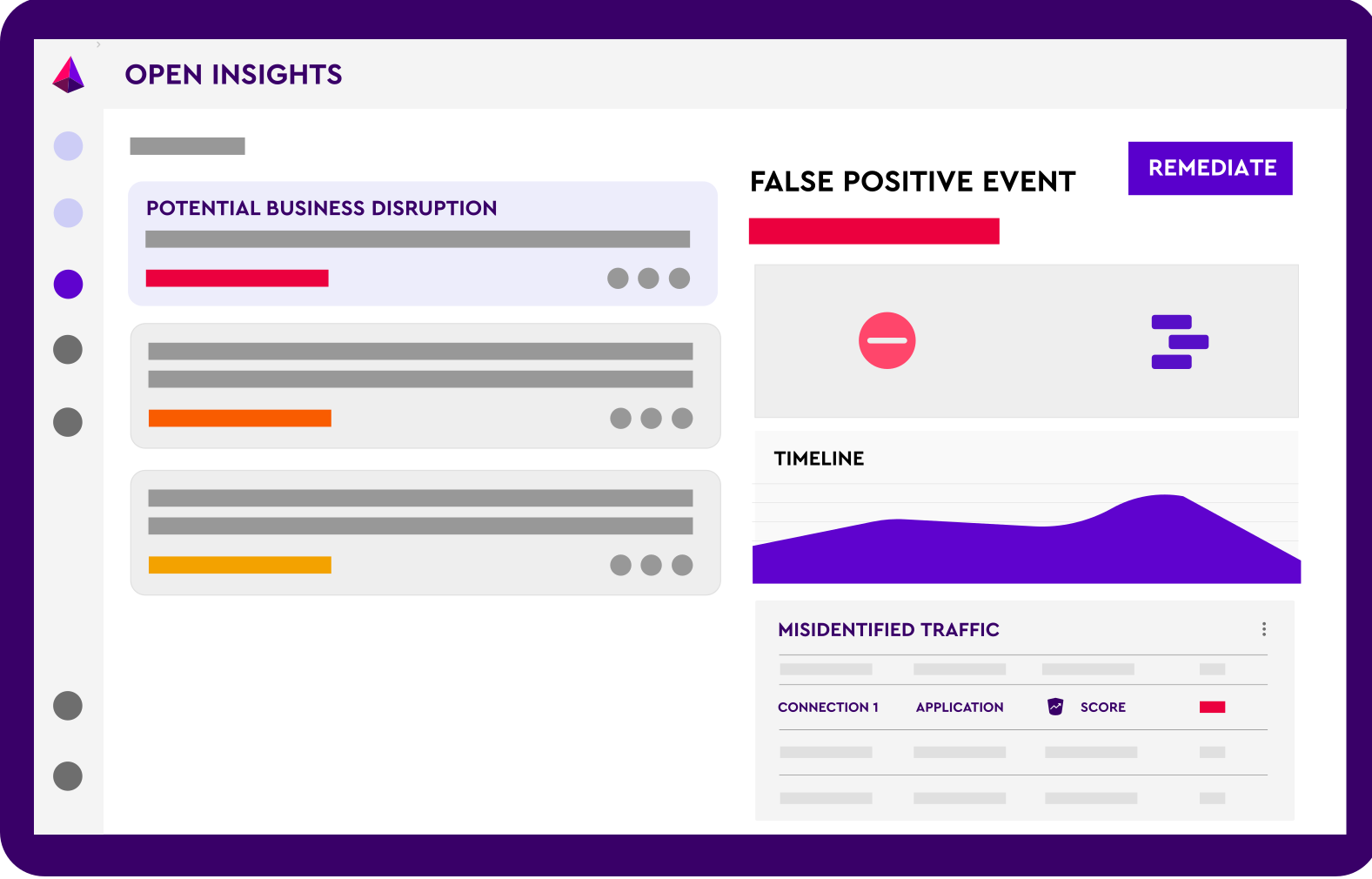
Safe Remediation

Minimize the risk of false positive events causing unintended consequences through proactive monitoring and granular, pointed exclusions that do not add to organization risk exposure

1 hour of business downtime saved per week by exclusively remediating misconfigurations that cause false positive events

FREQUENTLY ASKED QUESTIONS

WHAT ARE FALSE POSITIVE EVENTS IN CYBERSECURITY?

False positive events refer to security alerts that are triggered by benign activities, rather than actual security threats. These false alerts can be caused by a variety of factors, such as security misconfigurations or normal network activity that is mistaken for an attack.

How can false positive events be detected?

One approach is to establish baselines of normal behavior for the system or network being monitored, and then compare each alert against these baselines to determine if it is anomalous or not. Another method is to use machine learning algorithms to analyze patterns in the data and identify any outliers that may be indicative of false positives.

How do false positive events impact security operations?

False positive events can have a significant impact on security operations by overwhelming security teams with unnecessary alerts and diverting resources away from actual security threats. This can lead to delayed response times and an increased risk of data breaches.

How can false positive events be reduced or eliminated?

False positive events can be reduced or eliminated by improving the accuracy of security systems, such as through adjusting security rules and configurations, implementing machine learning algorithms, or using threat intelligence feeds.

What is the best approach to minimize the impact of false positive events?

The best approach to minimize the impact of false positive events is through implementing a multi-layered security strategy that includes real-time monitoring, automated analysis and contextualized remediation to quickly identify and resolve false positive events.


Product

Product Overview

Maximize security posture while ensuring business uptime

Automated Security Controls Assessment

Validate your security control

Integrations

Connect Veriti with your security solutions

Veriti is a triple winner at the Global InfoSec Awards 2025


Read More >>

Use Cases

Security Control Hardening

Reduce risk across the network, endpoint and operating system.​​
Assessing Risks Icon

Threat intelligence enforcement

Extend and enforce threat intelligence across all security controls​

Vulnerability Remediation

Safely remediate vulnerabilities in one click

Agentless OS-Level Remediation

Remediate directly at the OS-Level on the endpoint​

Solutions

Veriti Cloud

First cloud native remediation for your workloads​

Safe Remediation

Ensure remediation actions do not give rise to additional exposures

Odin

AI-Powered Contextual Cybersearch

MITRE ATT&CK®

Quickly respond to live threats with safe and precise remediation

Industries

Veriti for Financial Services

Increase business outcomes

Veriti for MSSPs

Efficiently manage multiple clients in a consolidated platform

Veriti for Healthcare

Neutralize security gaps without impacting healthcare operations

Veriti for Manufacturing

Protecting the heart of your production

Resources

See all resources

Blog

Veriti's security blog

Downloads

The latest guides, white papers and infographics

Videos

Watch the latest in exposure assessments

Events

Live event and on-demand webinars

Glossary

Our Comprehensive Definitions Guide

Veriti is the Sole Vendor Recognized in
Gartner 2025 Preemptive Exposure Management


Read the Report >>

Our Story

Learn about Veriti

Careers

Work with us

Newsroom

Our latest updates

Contact US

Get in touch

CHANNEL PARTNERS

Become a partner

MSSPs

Reduce operational costs